

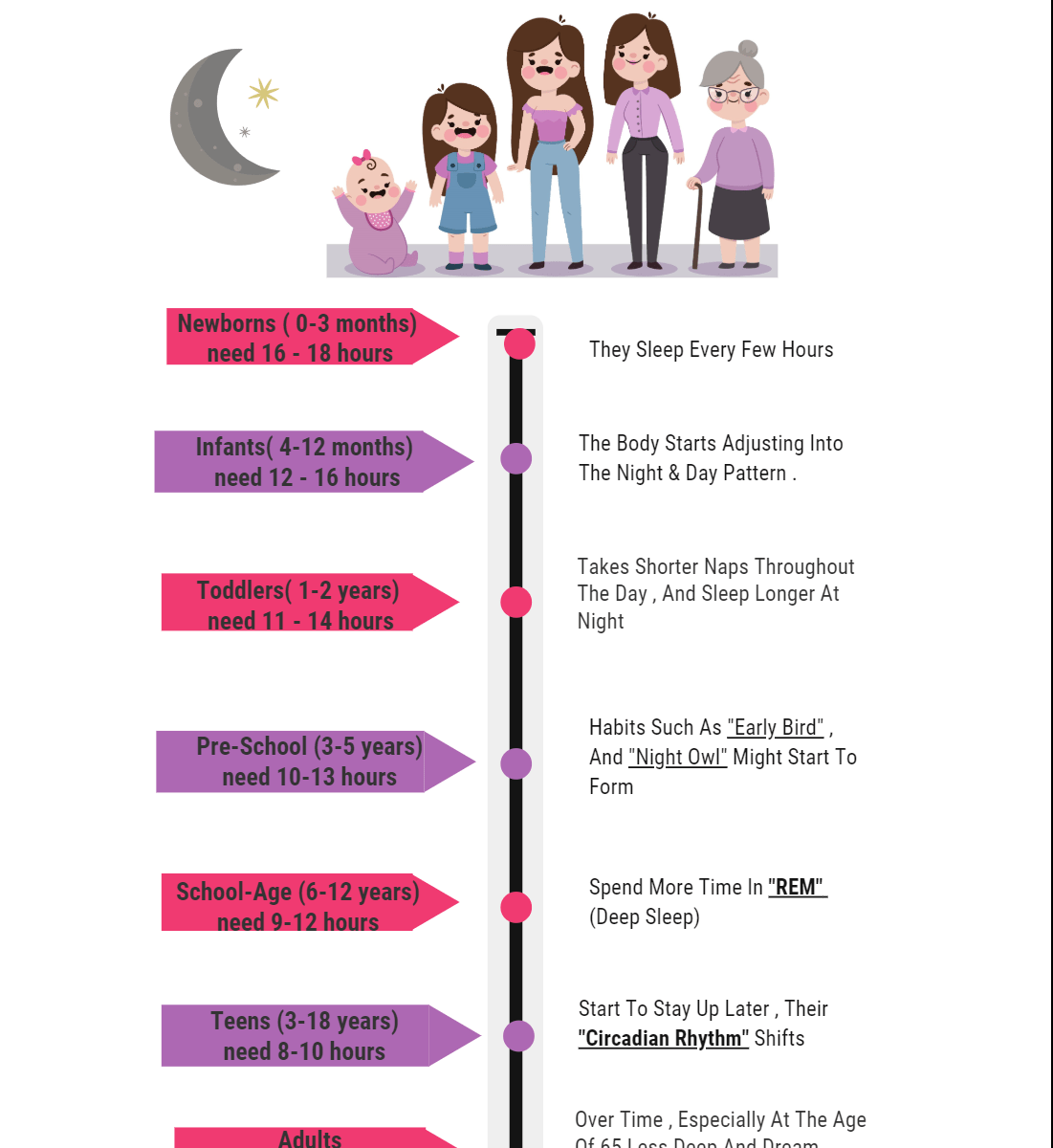
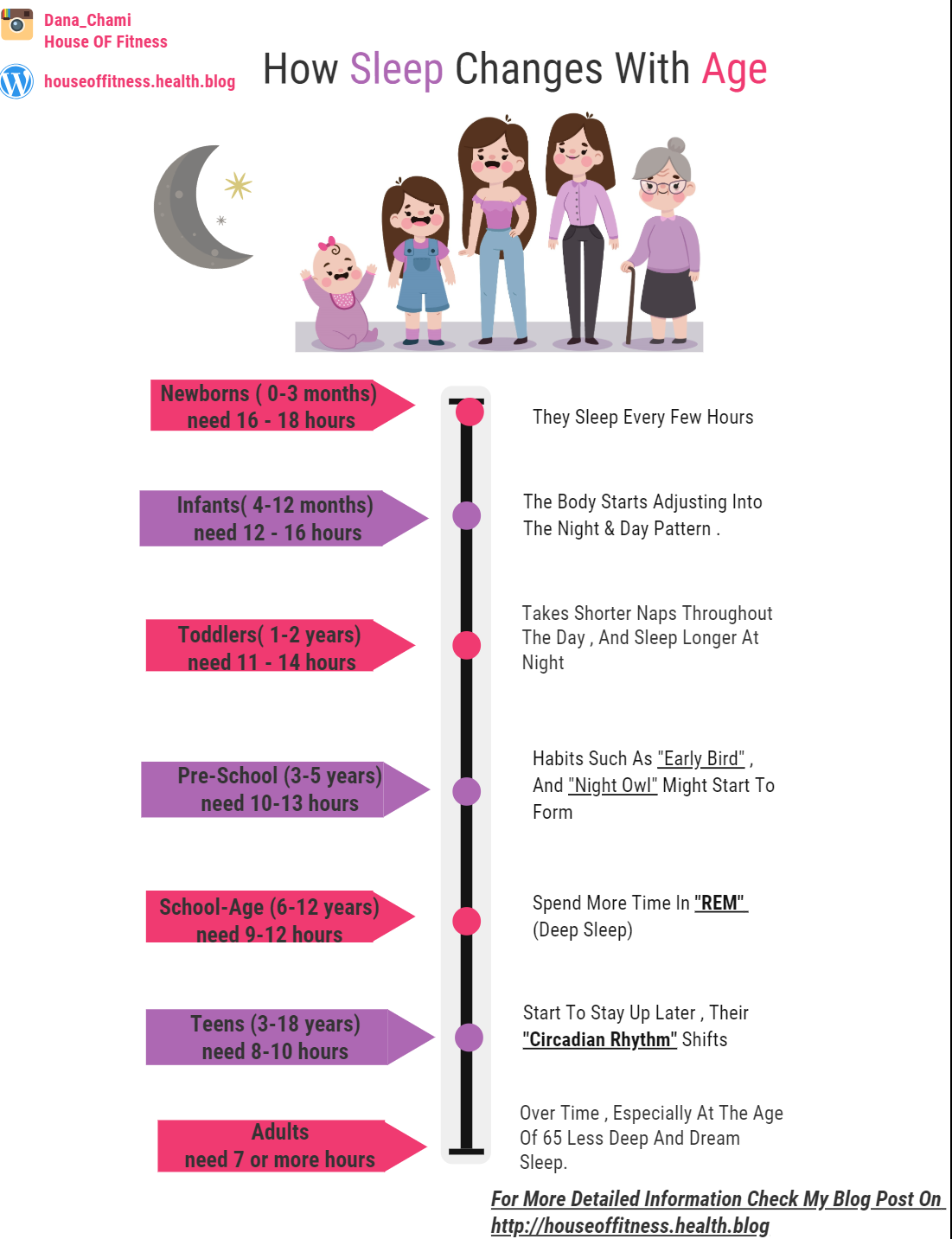
The amount of sleep a human needs varies depending on some factors like the individuals age. As we grow older our needs shift , we develop new habits and patterns that can sabotage our sleep .
5-18 hours a day are the typical hours a newborn spends sleeping a day, but only in short periods of two to four hours. The reason behind this is ,newborns do not yet have an internal biological clock, or circadian rhythm, their sleep patterns are not related to the daylight and nighttime cycles. In fact, they did not develop any pattern at all. By 6 weeks of age , the baby is getting accustomed to its new environment and you will notice some sleeping patters emerging. the day and night confusion is put to an end and the sleep is occurring regularly in the evening for longer periods.
Establishing healthy sleep habits is a primary goal . Babies typically have three naps and drop to two naps at around 6 months . Regular naps generally happens at year 1-5 , as the biological rhythms mature . At the age of 3 -5 children develop the “Early Bird” , and “Night owl” habits . A night owl, is a person who tends to stay up until late at night, or the early hours of the morning. Whereas an early bird is someone who tends to sleep and wake up at an early time.
Unfortunately as we get older, changes to our sleep patterns are a normal aging process. As we age we have a harder time falling asleep and staying asleep than when we are younger. It is a common misconception that sleep needs decline with age. In fact, research shows that our sleep needs remain constant throughout adulthood. So, what’s keeping us awake? And what are the best aids we can take for a good night’s sleep. Stay tuned for the upcoming post.
https://www.instagram.com/houseoffitnessbydana/
Sources :
https://www.lifehack.org/articles/productivity/7-differences-between-early-birds-and-night-owls.html
https://www.webmd.com/sleep-disorders/features/sleep-changes
https://www.pregnancybirthbaby.org.au/sleep-patterns-for-babie
Freepik
 House Of Fitness